Description
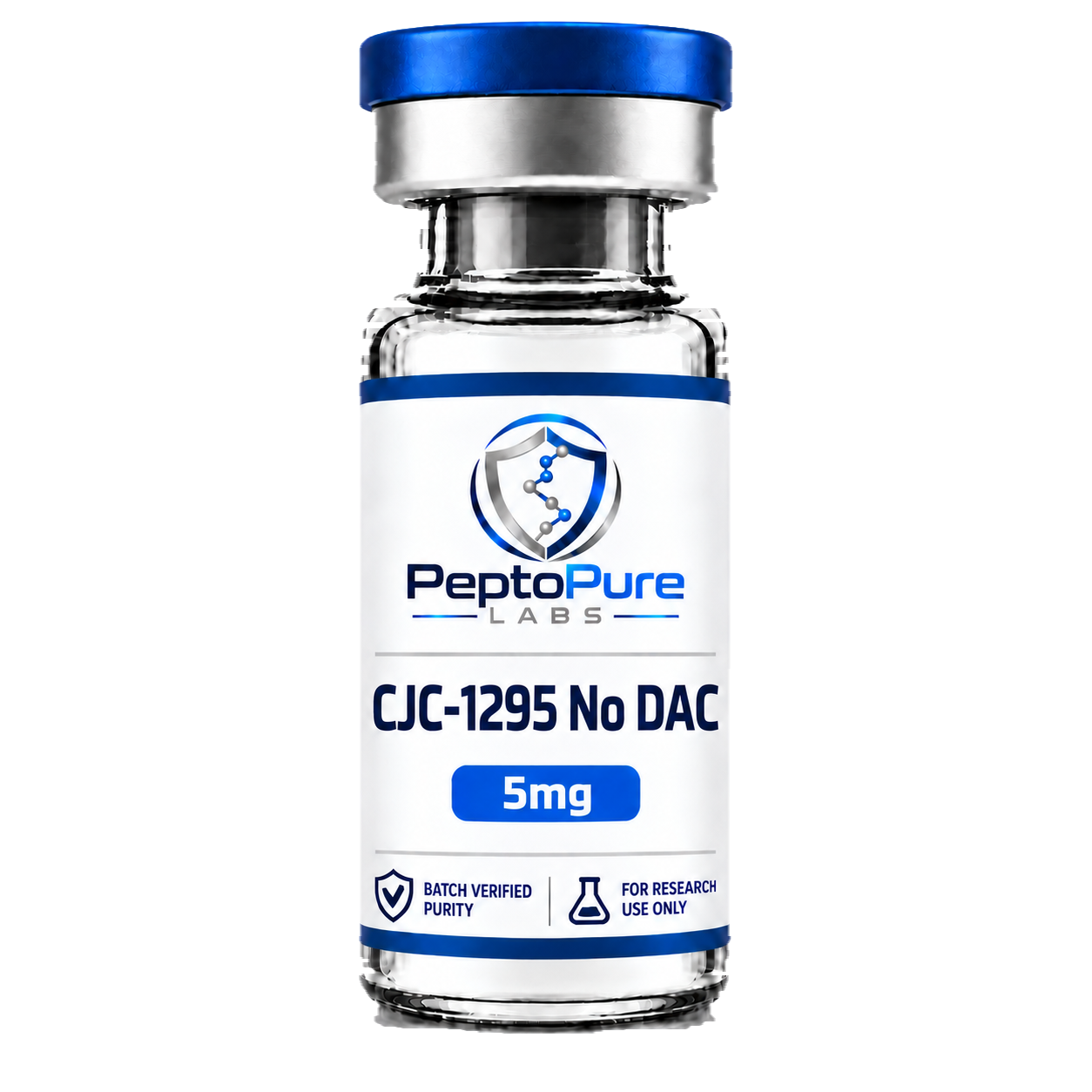
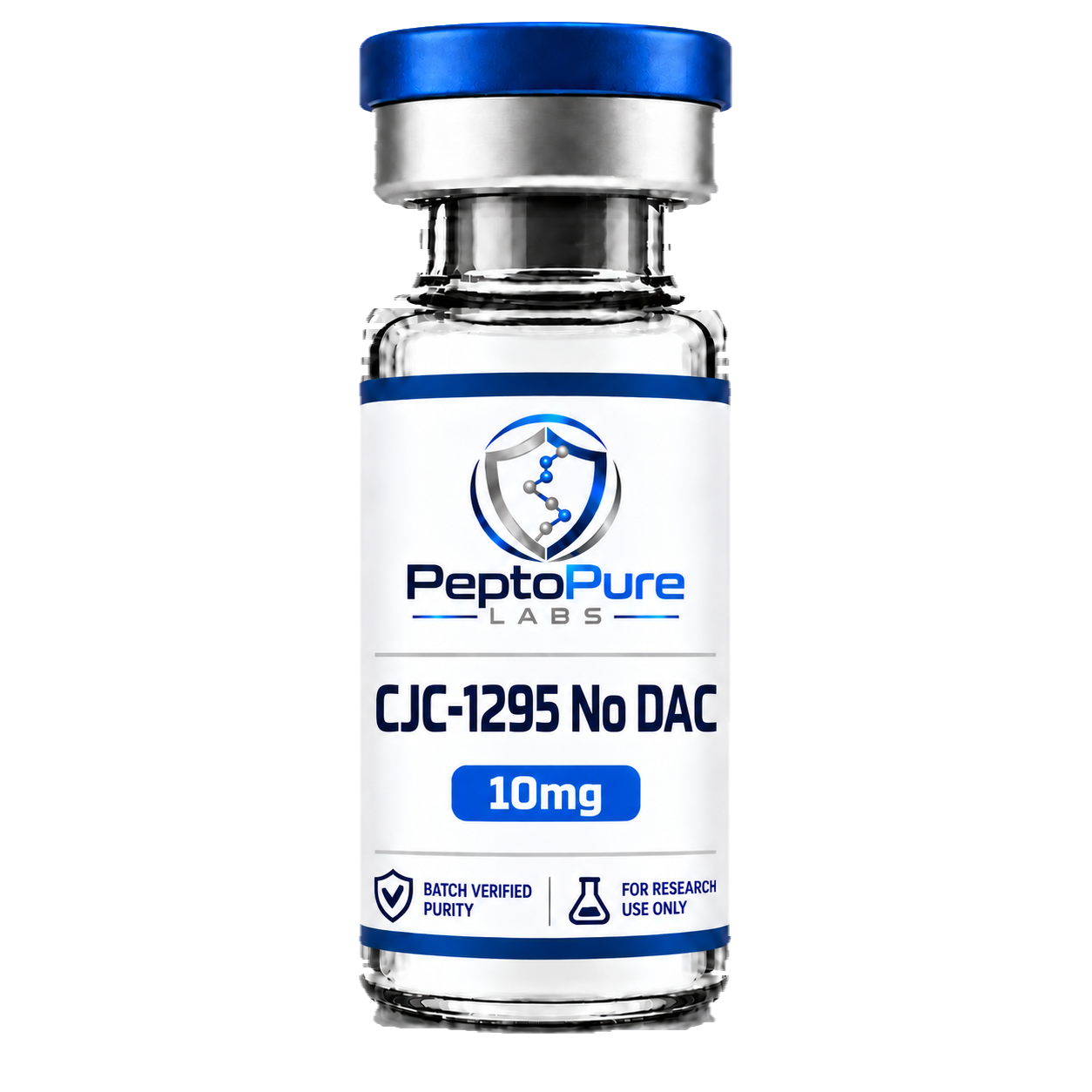
CJC-1295 No DAC 5 mg and 10 mg
Buy CJC-1295 No DAC 5 mg or 10 mg for laboratory research. Each vial contains the stated amount of CJC-1295 No DAC as lyophilized powder.
- 5 mg: per vial
- 10 mg: per vial
CJC-1295 No DAC, also known as Modified GRF (1-29) or tetrasubstituted GRF (1-29), is a 29-amino-acid analogue of growth hormone-releasing hormone (1-29) amide carrying four substitutions: D-alanine at position 2, glutamine at 8, alanine at 15 and leucine at 27. It has no C-terminal lysine linker or maleimidopropionyl group.
Choose the size
The 5 mg and 10 mg vials contain the same peptide in different labelled amounts. Choose the size that suits the quantity your experimental design requires.
CJC-1295 No DAC and CJC-1295 with DAC are different molecules. The DAC (drug affinity complex) version adds an N-epsilon-maleimidopropionyl-lysine at the C-terminus, which is designed to bind albumin and changes its molecular weight and behaviour. The two names are sometimes used interchangeably in published and commercial sources, so confirm which molecule a study or document refers to before comparing results. This product does not contain the DAC moiety.
What the research establishes
The substitutions in Modified GRF (1-29) were introduced to make the GRF (1-29) sequence more resistant to enzymatic cleavage, particularly by dipeptidyl peptidase-4 at the N-terminus, than the unmodified fragment. Published work on this specific sequence is limited, and much of the literature on GHRH analogues concerns related but distinct compounds.
Teichman and colleagues reported prolonged increases in growth hormone and IGF-I in healthy adults given CJC-1295. That study used the DAC-modified, albumin-binding molecule, not the No DAC peptide supplied here. Its findings concern that molecule under those conditions, not the properties or performance of this product.
Review the COA and product files
The COA & Documentation page contains the available batch reports and product documentation. Check that the lot number and strength match your vial, that the identity method (for example mass spectrometry) confirms the No DAC molecular weight rather than the DAC form, and which method was used to determine purity.
The strengths above describe labelled material, not a measured result for every lot. For handling and storage, consult the records that apply to your lot.